

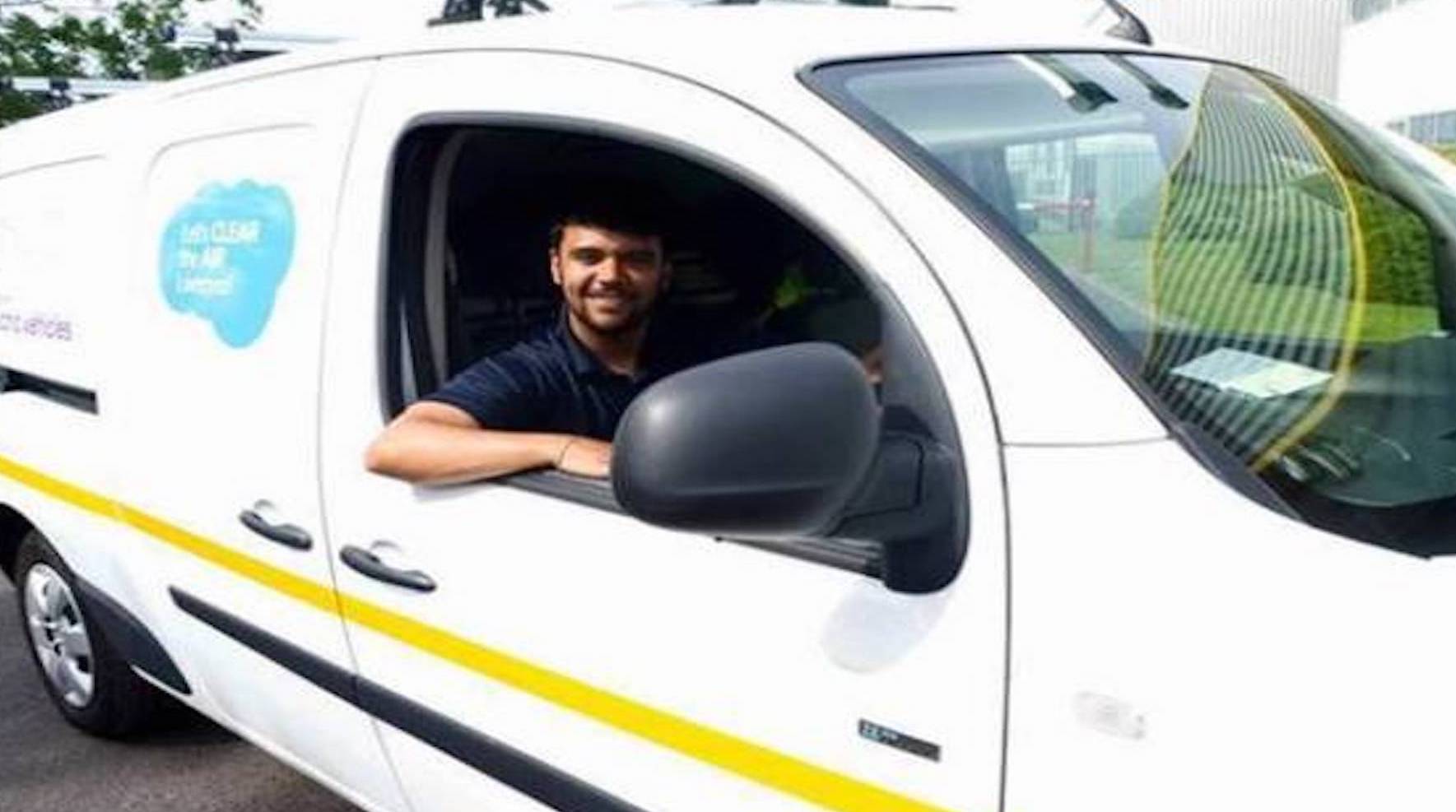
Liverpool City Pest Control exterminates their emissions with electric vehicles.
A Liverpool City Pest Control Team are causing some excitement in the environmental friendly community after switching a fleet of their diesel vans in favour of emission-free electric vans.
The Liverpool City Council Team partnered with Renault UK to replace the polluting diesel vans to greener electric vehicles. Thanks to this, the Pest Control Team can continue visiting homes, businesses and public buildings across the city to rid them of their rodent problems or insect infestations.
The team visit more than 8,000 cases a year across the Liverpool region. Each member of the team can drive over 40 miles a day to tend to over 20 calls in a single day, which can clock up to 800 miles a week across the team. Now the team in their four-strong fleet of vans, no longer have to worry about the harmful emissions being emitted into the environment. With their four fleets of new sustainable vehicles, The Pest Control Team can continue doing what they do best.
The vans contain smaller-sized batteries meaning they use less precious metals along with their zero pipeline emissions. But this smaller battery doesn’t affect the performance of the vans, as during the summer months an impressive 125 miles can be driven from a single charge.
With thanks to Renault UK, the new Kangoo vans have been custom-built so the Pest Control Team can get all their exterminating equipment in the back without any damage. Better yet, the super sustainable vans even contain a specially-concealed sink and hygiene unit to allow team members to clean up between jobs.
Mathew Kiziuk, Regional Development Manager for Electric Vehicles for Renault UK, said: “These vehicles are clearly doing a greatjob for the council. The feedback I have received has been phenomenal. Electric vehicles are not something to be scared of, you don’t need to be worried about them. The team isn’t going to be sat on the side of the road having run out of electricity.
“We are really proud that we have been able to work with the council to make sure all the conversions have been carried out and all the vehicles have been custom-built for the pest control team.”
The move to electric vehicles forms part of Liverpool City Council’s wider commitment to improving air quality in the city and protecting the environment in the region, including stating its determination to reduce the city’s carbon-emissions to zero by 2030, whilst also declaring a climate change emergency at a special debate on July 18th 2019.
Pest Control Officer, Ivan Jenkins said: “This is our planet, this is our city and we need to make sure we are looking after it the best we can. We can’t ask people to drive electric vehicles if the local authority isn’t doing that as well. By using electric vehicles it shows everyone that we are making a change and others should follow suit. It is only going to benefit us, our children and their children. It is a positive step and the customers notice as well. Whenever I pull up to someone’s house and they see the sign on the side they want to ask me questions and know how many electric vehicles the council has got, so it makes me proud to know we are doing our bit and encouraging others.
“I have been really impressed with the new vans. They are clean and they are quiet, which is important when you are doing early morning rounds in different neighbourhoods. Because we do a lot of miles, they make the driving much easier.”
In total, Liverpool City Council has a fleet of 200 cars, vans and minibuses and for over 10 years has operated low-carbon fuel-efficient vehicles.
The council has increased the number of hybrid and electric vehicles on the fleet, since the Mayor of Liverpool stated his commitment to improve air quality in 2017. In just two years, the fleet of diesel vehicles used by the council has fallen from 70% to 39%, with the council pledging to boosting this number within the next five years.
Cllr Laura Robertson-Collins, Liverpool’s City Council Climate Champion and newly-appointed Cabinet Member for the Environment and Sustainability said: “The way these vans have been adapted to meet the specific needs of the pest control team is a real innovation and we look forward to introducing more electric vehicles to our fleet in the future.
“Electric vehicles are also really cost-effective and there are considerable savings to be made, particularly on vehicles that do lots of miles each year. In the long-run it is our ambition to improve air quality and to save council tax payer’s money.
“It is clear that poor air quality has many adverse effects both on the environment and potentially on people’s health, so it is important that Liverpool leads the way in developing a long-term air quality strategy.”