
Monitoring & Managing Air Quality
in Liverpool City Region
Tracking air pollution and finding new ways to improve the air we breathe.

Monitoring Air Quality in the Liverpool City Region
Air pollution measurements and data from modelling are used to give us the best picture of air pollution across the Liverpool City Region. More information on air quality monitoring can be found on UK Air website https://uk-air.defra.gov.uk/.
Liverpool
In the city of Liverpool, there are six automatic air quality monitoring stations. Five of these monitors are managed by Liverpool City council and monitor Nitrogen Dioxide (NO2). These are located in Lime Street, Clayton Square, Speke Road, Everton Valley and Edge Lane. One monitor is manged by DEFRA and is located in Speke monitoring Nitrogen Oxides (NOx), particulate matter (PM10, PM2.5), Sulphur Dioxide (SO2) and polycyclic aromatic hydrocarbons (PAHs). There is also a network of 145 NOX passive diffusion tubes.
Knowsley
In the borough of Knowsley, there are two air quality monitoring stations that are located in Halewood on the junction of Higher Road and Old Hutte Lane and Huyton / Tarbock on the junction of Cronton Road and Whitefield Lane. The data from this station is collected by Defra and is accessed and can be accessed through the We Care 4 Air website. Knowsley Council monitors Nitrogen Oxides (NOx) and particulate matter (PM10 and PM2.5).
Halton
In the borough of Halton, there are two air quality monitoring stations located in Widness Milton Road and Widness Marzahn Way. The data from this station is collected by Defra and this information can be accessed via the Air Quality England website. The borough of Halton monitors Ozone (O3), Nitrogen Dioxide, (NO2) Sulphur Dioxide (SO2), Particulate Matter (PM2.5).
Sefton
The borough of Sefton has five air quality monitoring stations that are located in Crosby Road North, Crosby Road South, Princess Way, Millers Bridge and Hawthorne Road. There is also a network of 94 diffusion tubes. The Sefton Council commissioned AECOM, a global environmental consultancy, to produce an independent report to give them a clearer picture on patterns and sources of transport related air pollution in Sefton. The borough of Sefton monitors Nitrogen Dioxide (NO2), Particulate Matter (PM10) and Sulphur Dioxide (SO2).
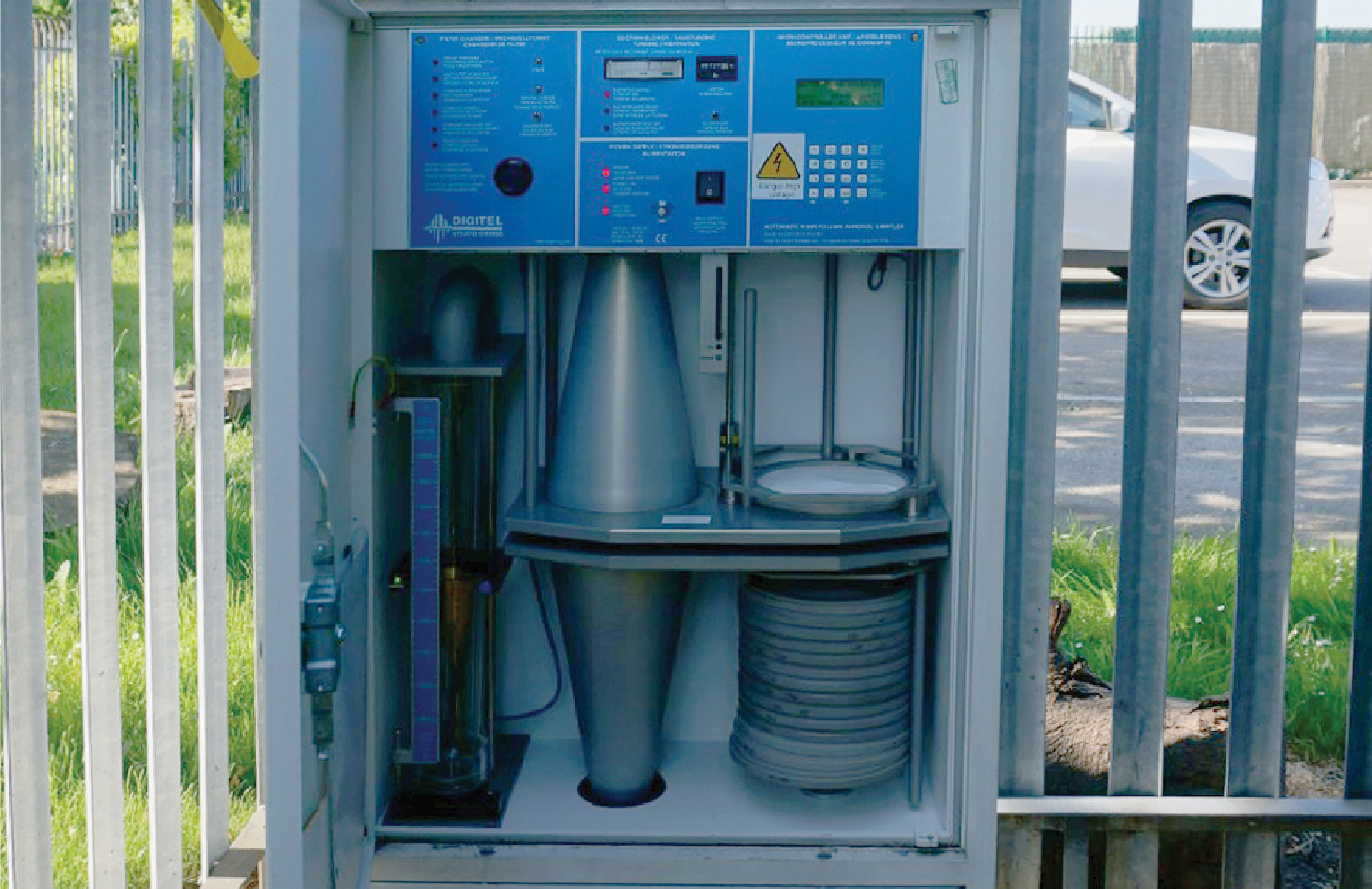
(Above) Urban monitoring station in Speke.
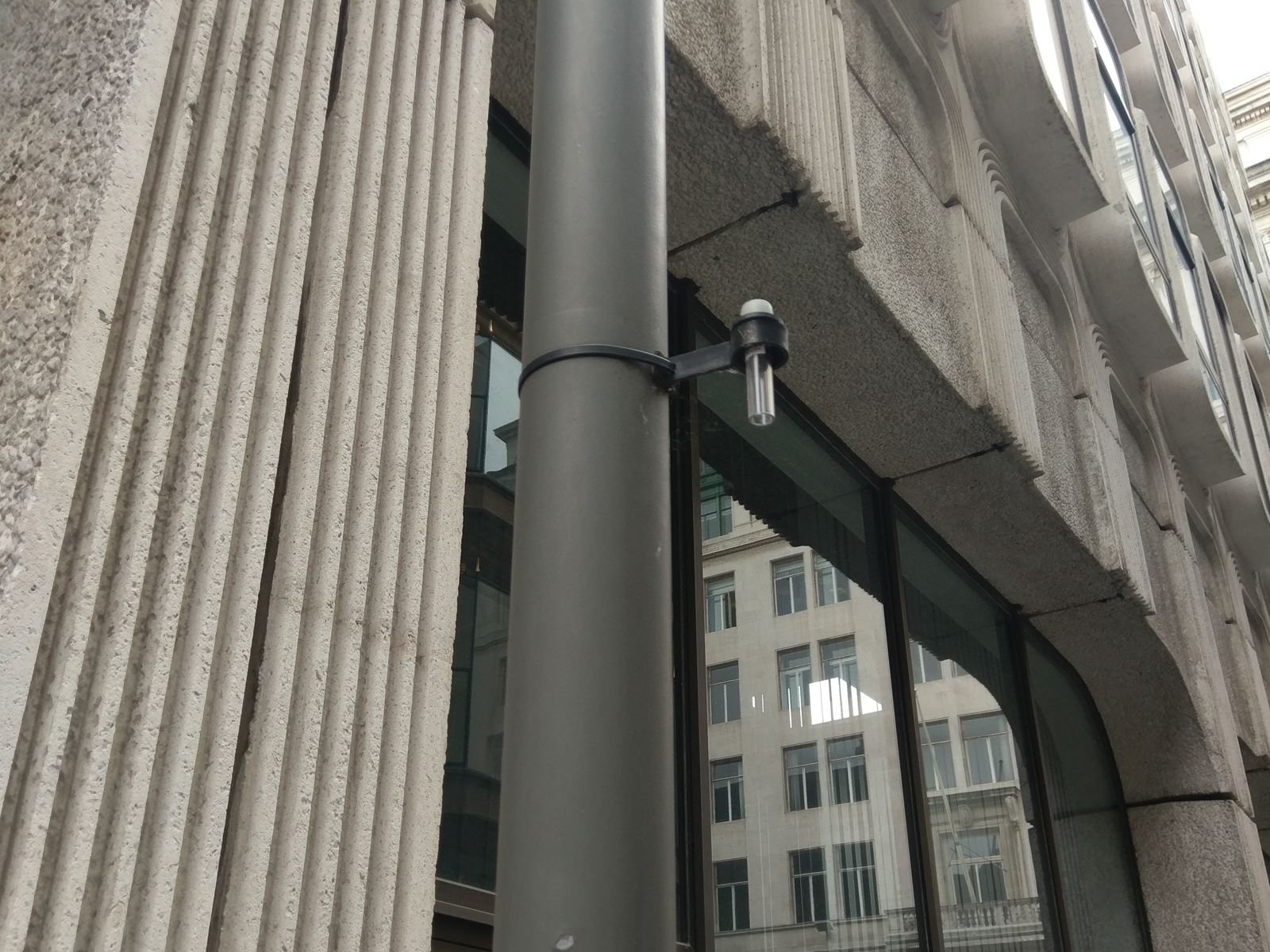
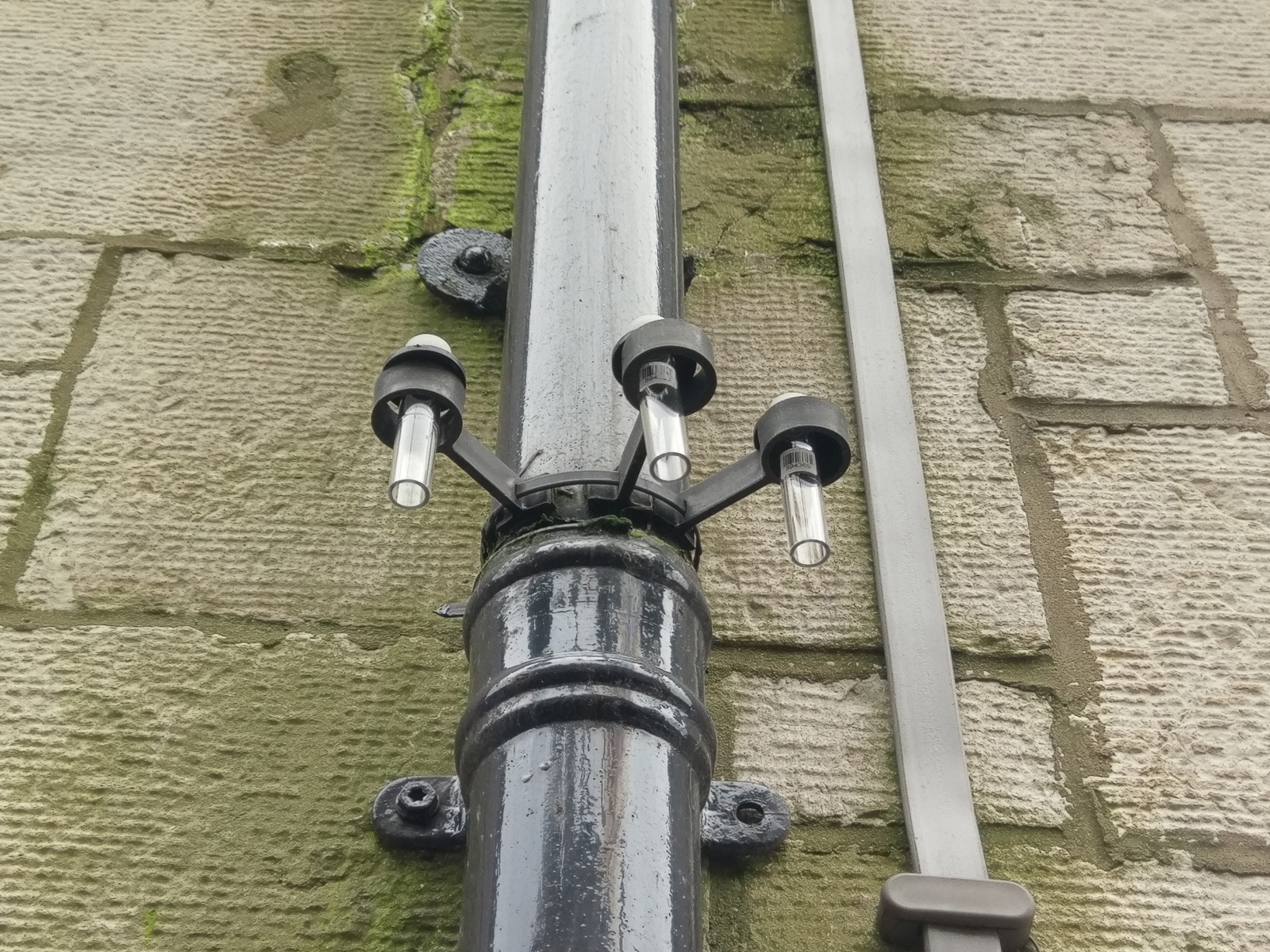
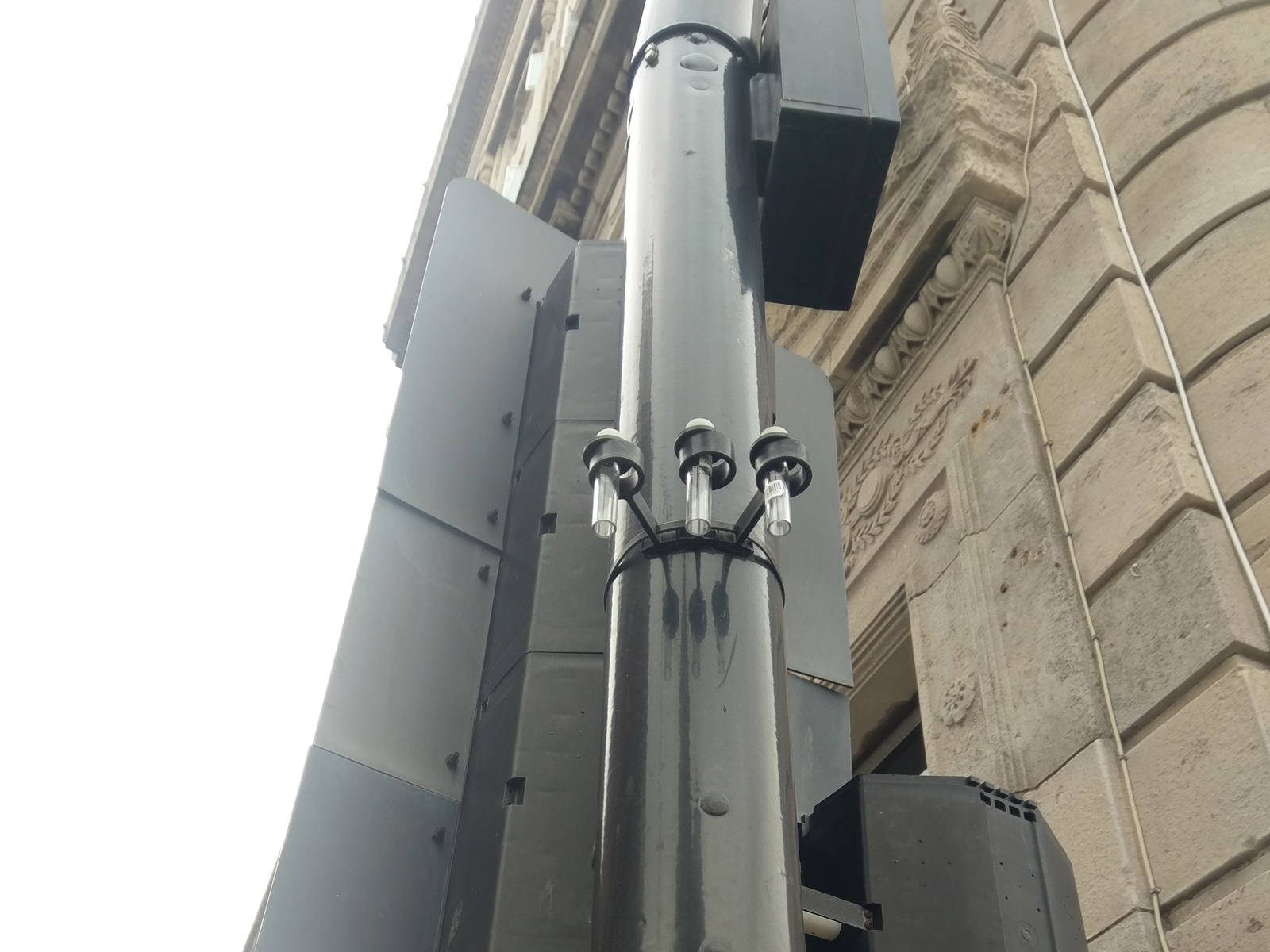
(Above) Passive diffusion tubes are often placed high on lampposts around the city.
St Helens
In the borough of St Helen’s, there are four air quality monitoring stations measuring nitrous oxides (NOx) and a network of 33 diffusion tubes monitoring Nitrogen Dioxide (NO2). These are located on the M6, the High Street in Newton-le-Willows, Borough Road and the Linkway Reflection Court. The local authority in this area monitor the data to identify the air quality in the area.
Wirral
In the borough of Wirral, there are two air quality monitoring stations ne at a background location (Tranmere), which monitors Nitrogen Dioxide, PM2.5 and Ozone and one at a roadside in Birkenhead town centre, which monitors for Nitrogen Dioxide. The data from this station is collected by Defra and is used by Wirral Council to monitor the borough.
Managing Air Quality in the Liverpool City Region
All local authorities are legally required to undertake Local Air Quality Management. This involves reviewing and assessing its air quality every year, to check that it will meet national air quality objectives for concentrations of different pollutants which are set to protect health. Where it is assessed that objectives will not be achieved, Local Authorities must declare an Air Quality Management Area (AQMA), and produce an action plan.
More information on Local Air Quality Management can be found on the Defra website at: https://uk-air.defra.gov.uk/aqma/
Liverpool
The whole of Liverpool is an AQMA, as there are several locations across the city where air quality thresholds are not being met https://uk-air.defra.gov.uk/aqma/local-authorities?la_id=149
Although the whole of Liverpool has been declared as an AQMA, air quality varies across the city. Concentrations are higher along busy roads.
Sefton
There are 5 AQMAs in Sefton https://uk-air.defra.gov.uk/aqma/local-authorities?la_id=226
St Helen’s
There are 4 AQMAs in St Helen’s https://uk-air.defra.gov.uk/aqma/local-authorities?la_id=256
Halton
There are 2 AQMAs in Halton https://uk-air.defra.gov.uk/aqma/local-authorities?la_id=116
Wirral
There are 0 ADMAs in Wirral.
Knowsley
There are 0 ADMAs in Knowsley.
Information for developers about air quality assessments
Where appropriate, developers have to consider the impact of their proposed development on air quality. If necessary, developers may have to appoint a consultant to undertake an Air Quality Assessment to look at the potential impact the development would have on existing air quality. Included within the assessment must be a baseline study which requires the latest monitoring data to be included and must take into account the most recent review and assessment reports. Some useful guidance on how to carry out air quality assessments is available at http://www.iaqm.co.uk/text/guidance/air-quality-planning-guidance.pdf
Annual status reports are produced by all Local Authorities and are available from your local Council. If you wish to obtain any of these reports, please use the appropriate tab above to find a link to your local council who can help you find the most up to date information, in some instances the information is not freely available and may incur a cost.